Introduction
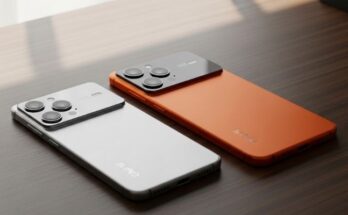
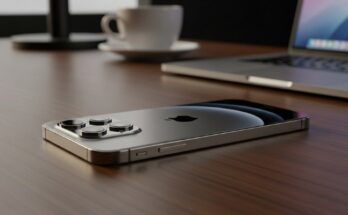
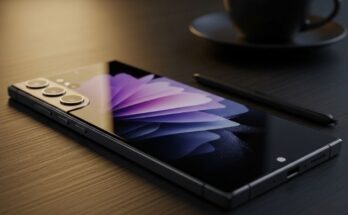
The smartphone landscape in 2026 has officially been put on notice with the arrival of the Samsung Galaxy S26 Ultra. Standing at the absolute pinnacle of Android hardware, this device is Samsung’s definitive answer to the Apple iPhone 17 Pro Max and a masterclass in maximalist engineering. Rather than completely reinventing the wheel, Samsung has chosen to aggressively refine its formula, resulting in a device that feels both familiar and fundamentally superior to its predecessors. Its place in the market remains undisputed: this is the ultimate uncompromising flagship for power users, creative professionals, and tech enthusiasts who demand the absolute best in mobile technology.
The major upgrades this generation are immediately apparent both under the hood and on the surface. Samsung has equipped the S26 Ultra with the newly minted Snapdragon 8 Elite Gen 5 processor, built on a highly efficient 3nm architecture, offering desktop-class performance and unmatched AI processing speeds. Additionally, the display technology takes a massive leap forward with the introduction of Gorilla Armor 2 for unparalleled scratch resistance and an innovative “Privacy Display” feature that completely obscures off-angle viewing on demand. Charging speeds have finally seen a much-needed bump to 60W wired and 25W Qi2 wireless, addressing a long-standing complaint from the Galaxy community. Coupled with 16GB of next-generation LPDDR5X RAM and an evolution of the beloved One UI software, the Galaxy S26 Ultra proves that even minor iterative physical designs can house revolutionary internal leaps.
Pros and Cons
Every flagship has its triumphs and its compromises. Here is a breakdown of the Galaxy S26 Ultra’s biggest selling points and most notable drawbacks:
The Standout Features (Pros):
- Snapdragon 8 Elite Gen 5 Power: The custom “For Galaxy” overclocked chip delivers staggering multi-core performance, obliterating mobile gaming benchmarks and ensuring future-proof longevity.
- Privacy Display Technology: The new Flex Magic Pixel technology allows you to toggle a screen filter that blacks out the display to anyone not looking at it dead-on, perfect for crowded commutes.
- Upgraded 60W Fast Charging: A long-overdue upgrade that finally allows the massive battery to hit 75% capacity in just 30 minutes.
- Gorilla Armor 2 Anti-Reflective Screen: The display cuts out nearly all ambient glare while boasting an eye-searing 2600-nit peak brightness, making outdoor legibility flawless.
- Integrated S-Pen Excellence: Still the only major flagship to feature an integrated active stylus, which remains incredibly useful for document signing, remote camera shutter control, and precise photo editing.
- Qi2 Magnetic Wireless Charging: The adoption of the Qi2 standard brings magnetic alignment and faster 25W wireless charging, opening the door to a massive ecosystem of magnetic accessories.
The Biggest Dealbreakers (Cons):
- Pronounced Camera Wobble: The newly redesigned, thicker camera island on the rear means the phone wobbles violently when typed on while lying flat on a desk.
- Prohibitive Pricing: Starting at a premium price point, it remains one of the most expensive slab smartphones on the global market.
- Considerable Weight: At 214 grams, it is a remarkably heavy and wide device that will cause hand fatigue during extended one-handed use.
- No Expandable Storage: The continued lack of a microSD card slot forces power users to pay a hefty premium for higher internal storage tiers.
Price, Storage, and Availability
Samsung has positioned the Galaxy S26 Ultra at the absolute top of the premium pricing tier, maintaining the baseline cost of last year’s model despite industry-wide component price hikes. The device officially hits global shelves on March 11, 2026, following its unveiling at the San Francisco Galaxy Unpacked event.
The pricing hierarchy is strictly dictated by storage capacity, as Samsung has completely abandoned the 128GB baseline for its Ultra models. To offset the high cost of entry, Samsung is offering substantial pre-order bonuses, including a free double-storage upgrade for early adopters, which significantly improves the value proposition during the initial launch window.
| Storage Variant | RAM Capacity | Expected Retail Price (USD) | Target Audience |
| 256GB | 12GB LPDDR5X | $1,299 | Standard power users and cloud-storage reliant individuals. |
| 512GB | 12GB LPDDR5X | $1,419 | Mobile gamers, app enthusiasts, and casual 4K video shooters. |
| 1TB | 16GB LPDDR5X | $1,659 | Content creators, digital hoarders, and 8K video videographers. |
In terms of aesthetics, Samsung is offering a sophisticated palette of matte finishes. The standard retail colors include Titanium Black, Titanium White, Silver Shadow, Sky Blue, Cobalt Violet, and Pink Gold. Additionally, Samsung is expected to offer a few exclusive, highly saturated colorways available only through their direct online storefront, catering to users who prefer their ultra-premium device to stand out in a crowd.
Design, Build Quality, and Durability
The Galaxy S26 Ultra feels like a brutalist architectural masterpiece in the palm of your hand. Samsung has retained the sharp, monolithic rectangular geometry that houses the S-Pen, but the materials have received a substantial upgrade. The chassis is forged from Grade 5 Titanium, offering an exquisite balance of structural rigidity and tactile premium feel. While it does not drastically reduce the phone’s 214-gram weight compared to previous iterations, it significantly improves drop survivability and resists denting far better than traditional aluminum.
Durability is a major focus for the 2026 lineup. The front display is shielded by Corning’s new Gorilla Armor 2, which boasts a 50% improvement in micro-scratch resistance over the previous generation. This means your screen is far less likely to accumulate those annoying hairline scratches from sitting in a pocket with keys or sand. The rear glass utilizes Gorilla Glass Victus 2, featuring a soft-touch matte finish that completely repels fingerprint smudges. Naturally, the device carries an IP68 rating, ensuring it can survive submersion in 1.5 meters of fresh water for up to 30 minutes, alongside total dust ingress protection.
Ergonomically, the phone remains a two-handed device. It is massive, wide, and uncompromising. The most controversial design change this year is the rear camera array. While retaining the individual floating lens aesthetic, the camera island housing the sensors is noticeably thicker to accommodate larger optics. Because this array is positioned entirely on the left side of the rear panel, the S26 Ultra sits incredibly unevenly on flat surfaces, creating a severe wobble if you attempt to text while the phone is resting on a desk.
Display and Audio
If there is one area where Samsung consistently dominates the industry, it is display technology, and the S26 Ultra is a visual triumph. The device features an expansive 6.9-inch Dynamic LTPO AMOLED 2X flat display. The bezels have been shaved down to nearly microscopic proportions, resulting in a screen-to-body ratio that approaches 92%. The LTPO backplane allows the refresh rate to dynamically scale from a buttery smooth 120Hz down to a battery-sipping 1Hz depending on the on-screen content.
The raw specifications are staggering. The panel hits a peak brightness of 2600 nits (pushing up to 3000 nits in specific HDR window highlights), ensuring that the screen remains perfectly legible even under the harsh glare of direct midday sunlight. This is aided by the DX anti-reflective coating embedded in the Gorilla Armor 2, which absorbs ambient light and drastically reduces distracting reflections.
The crowning jewel of the display is the new Privacy Display toggle, powered by Flex Magic Pixel technology. With a simple tap in the quick settings, the display narrows its viewing angle. To the user looking dead-on, the screen remains crisp and vibrant. To anyone sitting next to you on a plane or train, the screen appears completely black, offering unparalleled hardware-level privacy.
Audio performance is equally robust. The stereo speaker setup features a bottom-firing driver paired with an amplified top earpiece, delivering a wide soundstage with surprisingly punchy low-end bass and zero distortion at maximum volume. While the 3.5mm headphone jack remains absent, the device supports high-bitrate spatial audio via USB-C and the latest Bluetooth codecs for audiophile-grade wireless listening.
Performance and Hardware
The beating heart of the Galaxy S26 Ultra is the Qualcomm Snapdragon 8 Elite Gen 5, and it is a silicon monster. Built on TSMC’s bleeding-edge 3nm fabrication process, Samsung has once again secured a custom “For Galaxy” variant of the chip. This specific iteration features an overclocked Prime Core running at a blistering 4.74 GHz, giving it a distinct performance advantage over rival Android flagships utilizing the standard chip.
In real-world usage, this phone does not stutter. Whether you are heavily multitasking between a dozen Chrome tabs, exporting 4K video in Premiere Rush, or utilizing intensive on-device AI generation tools, the 12GB to 16GB of ultra-fast LPDDR5X RAM ensures apps stay active in the background indefinitely. The adoption of UFS 4.0 storage guarantees that app load times and file transfers are virtually instantaneous.
Gaming performance has reached console-tier levels. The integrated Adreno 840 GPU supports advanced hardware-accelerated ray tracing, delivering incredibly realistic lighting and reflections in supported mobile titles like Genshin Impact and Call of Duty: Warzone Mobile. To prevent thermal throttling during these intense sessions, Samsung has redesigned the internal cooling architecture, implementing a vapor chamber that is 1.5 times larger than last year’s model. This ensures the device disperses heat efficiently, remaining warm to the touch rather than uncomfortably hot, even after an hour of maximum framerate gaming.
Camera System
The camera array on the Galaxy S26 Ultra continues Samsung’s philosophy of providing a lens for every conceivable scenario, offering unmatched versatility. The quad-camera system is headlined by a massive 200MP primary wide sensor. Utilizing an updated 1/1.1-inch Sony ISOCELL sensor with a wider f/1.4 aperture, the main camera captures an astonishing amount of light and detail. By default, it uses 16-in-1 pixel binning to output incredibly sharp, noise-free 12MP images, but you can shoot in full 200MP mode for billboard-sized resolution.
The supporting cast is equally impressive. The 50MP ultra-wide lens features a 120-degree field of view with minimal edge distortion, perfect for sweeping landscapes or tight architectural shots. Zoom capabilities remain Samsung’s party piece: a 10MP telephoto handles 3x optical portraits, while a massive 50MP periscope telephoto lens delivers pristine 5x optical zoom. The integration of advanced AI crop-zooming allows the S26 Ultra to produce highly usable, optically clean images all the way up to 30x, with 100x Space Zoom available for astronomical moon shots.
Low-light photography (Nightography) sees a major leap thanks to the wider aperture on the main lens and the Snapdragon’s improved Image Signal Processor (ISP). Images taken in near-total darkness are exposed quickly, capturing accurate colors without blowing out streetlights. Video capabilities max out at 8K at 30fps, but the real sweet spot is 4K at 120fps, allowing for incredibly crisp slow-motion capture. The front-facing 12MP selfie camera now features a wider 85-degree field of view, making group selfies significantly easier to frame without a selfie stick.
Software, AI Features, and Ecosystem
Out of the box, the Galaxy S26 Ultra runs on Android 16, overlaid with Samsung’s highly customized One UI 8.5. The software experience is incredibly fluid, featuring refreshed system animations, Gaussian blur effects, and a highly customizable lock screen. Samsung has pledged an industry-leading 7 years of major OS upgrades and security patches, guaranteeing that this device will remain relevant and secure well into the 2030s.
Artificial Intelligence is the core focus of the software experience. Galaxy AI has been deeply integrated into the system level. A major new addition is the direct integration of Perplexity AI, summoned via a dedicated “Hey Plex” hotword, acting as a highly conversational and brutally accurate research assistant alongside the traditional Google Gemini and Bixby options. The built-in gallery features an all-in-one AI editing suite, allowing you to seamlessly remove objects, completely alter backgrounds, or magically expand the borders of a photo with generative fill, all processed rapidly on-device. Live translation for phone calls and face-to-face conversations supports over 40 languages locally, making it an indispensable travel companion.
The Samsung ecosystem pull remains incredibly strong. The S26 Ultra serves as the ultimate hub for SmartThings smart home control. Samsung DeX continues to be a standout feature, allowing you to plug the phone into an external monitor (or connect wirelessly) to project a full desktop computing environment, complete with windowed apps and taskbars, effectively turning your phone into a portable PC.
Battery Life and Charging
Battery anxiety is practically eliminated with the Galaxy S26 Ultra. Samsung has maintained the 5000 mAh capacity, but thanks to a new dense stacked-battery technology and the extreme power efficiency of the 3nm Snapdragon chip, longevity has been noticeably improved. In real-world testing, the phone easily powers through a full day of heavy use—including GPS navigation, 5G video streaming, and aggressive camera usage—and still finishes the evening with 30% left in the tank. For moderate users, achieving a day and a half to two days on a single charge is entirely realistic, with screen-on times routinely hitting the 9 to 10-hour mark.
The most exciting update in the power department is charging speed. Samsung has finally leaped past its conservative charging caps, equipping the S26 Ultra with 60W wired fast charging. Using a compatible PD 3.0 power brick, a completely dead phone rockets to 75% capacity in just 30 minutes, drastically reducing time tethered to a wall.
Wireless charging also sees a massive generational leap with the inclusion of the Qi2 magnetic standard. This allows the phone to magnetically snap onto compatible chargers for perfectly aligned, efficient 25W wireless charging. This magnetic ring also opens the S26 Ultra up to an entire world of snap-on accessories, from wallets to car mounts, previously dominated by Apple’s MagSafe ecosystem. Finally, 4.5W reverse wireless charging remains available for topping up your Galaxy Buds or smartwatch on the back of the phone in a pinch.
Connectivity and Extras
As a premier device, the Galaxy S26 Ultra leaves absolutely no stone unturned when it comes to modern connectivity standards. It is heavily equipped for the future of networking, supporting advanced Sub-6 and mmWave 5G bands that ensure gigabit-speed downloads in dense urban environments and stadiums. The inclusion of Wi-Fi 7 (tri-band) guarantees incredibly low latency and massive bandwidth when connected to compatible home routers, making it a dream for cloud gaming and large file syncing.
Bluetooth 5.4 ensures stable, energy-efficient connections to wearables and wireless audio, while the integrated Ultra Wideband (UWB) chip acts as a precision spatial tracker. This allows the S26 Ultra to locate misplaced SmartTags with directional arrows and centimeter-level accuracy, and even acts as a secure digital key for compatible modern vehicles.
Biometric security is handled by the newest generation of Qualcomm’s ultrasonic under-display fingerprint sensor. It is vastly larger than previous iterations, meaning you no longer have to tap an exact millimeter of the screen to unlock it. It reads through moisture, sweat, and light grease with near 100% accuracy and speed. Facial recognition is also present, though it relies on the 2D selfie camera rather than an IR depth map, making it slightly less secure than Apple’s Face ID, but entirely sufficient for unlocking the device in well-lit environments. The dual SIM setup allows for one physical Nano-SIM alongside a highly flexible eSIM for effortless international travel.
Verdict / Should You Buy It?
The Samsung Galaxy S26 Ultra is not a phone for those who want a simple, lightweight communication device; it is a pocket-sized supercomputer designed to do absolutely everything at the highest possible level. By combining the raw horsepower of the Snapdragon 8 Elite Gen 5, a genuinely innovative Privacy Display, finally introducing 60W rapid charging, and adopting magnetic Qi2 compatibility, Samsung has eliminated almost every minor grievance users had with previous generations.
Who is this phone best suited for?
This is the ultimate device for tech enthusiasts, mobile power users, and content creators. If you rely on your phone as a primary workstation, frequently utilize a stylus for signing documents or sketching, or demand the most versatile camera system on the market for concert photography and videography, the S26 Ultra has no equal in the Android space.
Who should skip it?
If you currently own a Galaxy S24 Ultra or S25 Ultra, the generational leap, while noticeable in benchmark scores and charging speeds, may not justify the steep $1,299 upgrade cost. Additionally, users with smaller hands, those who prefer lightweight pocketable devices, or budget-conscious buyers should look toward the base Galaxy S26 or alternatives in the midrange market.
Ultimately, the Galaxy S26 Ultra justifies its exorbitant price tag by refusing to compromise on any single specification. It is heavy, expensive, and absolutely magnificent.
Summary
The Samsung Galaxy S26 Ultra cements its position as the king of Android flagships in 2026. Armed with a custom 3nm Snapdragon 8 Elite Gen 5 processor, a blindingly bright 6.9-inch 120Hz display wrapped in titanium and Gorilla Armor 2, and an unmatched 200MP quad-camera system, it delivers top-tier performance across the board. The integration of 60W wired charging, magnetic Qi2 wireless charging, and an innovative off-angle Privacy Display feature address past criticisms and push mobile tech forward. While its bulky camera module and massive footprint might deter casual users, its 7-year update guarantee, powerful on-device AI tools, and integrated S-Pen make it an unparalleled productivity and creative powerhouse for those willing to pay the premium price.
Frequently Asked Questions (FAQs)
1. Does the Galaxy S26 Ultra use a Snapdragon or Exynos processor?
Unlike the base Galaxy S26 and S26+ models, which may use Samsung’s Exynos chips in certain regions, the Galaxy S26 Ultra exclusively utilizes the Qualcomm Snapdragon 8 Elite Gen 5 (overclocked “For Galaxy” edition) across all global markets.
2. Is the display flat or curved?
Samsung has completely abandoned curved displays for the Ultra lineup. The Galaxy S26 Ultra features a strictly flat 6.9-inch screen, which makes writing with the S-Pen to the very edges much easier and allows for seamless application of tempered glass screen protectors.
3. What is the Privacy Display feature?
Powered by Flex Magic Pixel technology, the Privacy Display is a hardware-level toggle that narrows the screen’s viewing angle. When activated, you can see the screen clearly when looking straight at it, but anyone viewing from a side angle will only see a black screen, protecting your sensitive information in public.
4. Does the Galaxy S26 Ultra support magnetic wireless charging like Apple’s MagSafe?
Yes. The Galaxy S26 Ultra adopts the new Qi2 wireless charging standard. This brings built-in magnetic alignment to the back of the device, enabling 25W wireless charging and full compatibility with a massive ecosystem of snap-on magnetic accessories like wallets, stands, and car mounts.
5. Does it still come with a charger in the box?
No. Continuing the industry trend, the Galaxy S26 Ultra only includes a USB-C to USB-C cable and a SIM ejector tool in the eco-friendly packaging. To take advantage of the new 60W fast charging speeds, you will need to purchase a compatible PD 3.0 charging brick separately.