
Imagine you are driving home after a long shift, minding your own business, when a distracted driver clips your wing mirror or, worse, rear-ends you at a roundabout. You step out, heart racing, only to find the other driver has no paperwork, no policy, and essentially, no legal right to be on the tarmac. It is a visceral, sinking feeling. This isn’t just a rare stroke of bad luck; it is a systemic epidemic currently plaguing British motorways and side streets alike. Recent data reveals a staggering reality: nearly 160,000 uninsured cars seized on UK roads within a single year, highlighting a massive “ghost fleet” operating right under our noses.
We all feel the sting of rising living costs, but the surge in uninsured driving is a direct assault on the law-abiding citizen’s wallet. Every time someone chooses to skip their premium, you end up footing the bill through your own increased insurance costs. We are seeing a shift in how police forces utilize technology to hunt down these offenders, but the sheer volume of seizures suggests that the message isn’t hitting home for everyone. This article dives deep into why this is happening, the technology catching them, and what you must do to ensure you aren’t accidentally part of the problem.
The Staggering Scale of the Ghost Fleet
The Motor Insurers’ Bureau (MIB) and UK police forces have been working overtime, yet the numbers remain defiant. When we look at the fact that nearly 160,000 uninsured cars seized on UK roads occurred in such a short window, we are looking at a 20% spike in some jurisdictions. This isn’t just about people “forgetting” to renew; it is often a deliberate gamble against the system. The sheer logistics of seizing, towing, and storing 160,000 vehicles is a gargantuan task that strains public resources and clogs up impound lots from Cornwall to Caithness.
Why the sudden surge? Economic pressures are the obvious culprit, but there is also a growing misconception that “minor” trips don’t require full coverage. We see drivers venturing out for a quick grocery run or a school drop-off, assuming they are invisible to the law. They aren’t. In fact, the MIB has identified specific “hotspots” where uninsured driving is rampant, leading to intensified patrols and a zero-tolerance approach that leaves drivers stranded on the hard shoulder while their car is hoisted onto a flatbed.
From a professional perspective, the data suggests that it isn’t just the “clunkers” being taken away. High-end SUVs and luxury sedans are frequently among the nearly 160,000 uninsured cars seized on UK roads. This indicates a broader disregard for the Motorists’ Social Contract. If you think your premium car makes you look “too respectable” to be stopped, think again. The cameras don’t care about the badge on the grille; they only care about the data on the screen.
ANPR: The Relentless Eye in the Sky
How exactly are the police managing to identify such a massive volume of offenders? The answer lies in the devastating efficiency of Automatic Number Plate Recognition (ANPR). These cameras are everywhere—bolted to bridges, hidden in the grilles of unmarked interceptors, and mounted on mobile vans. They scan thousands of plates per hour, cross-referencing them instantly with the Motor Insurance Database (MID). If there is even a millisecond of lag in your policy update, the system flags it.
The tech has become so sophisticated that it can now predict “high-probability” routes for habitual offenders. We are no longer in an era where a police officer needs to see “suspicious” driving to pull you over. The computer does the profiling before the officer even flips the blue lights. It is a digital dragnet that is largely responsible for the nearly 160,000 uninsured cars seized on UK roads, making it nearly impossible to commute daily without being scanned multiple times.
Expert insight: Many drivers fall into the trap of thinking their “Drive Other Cars” (DOC) extension covers them on a friend’s vehicle. In 2026, many insurers have stripped this clause out of standard policies. If you are caught driving a vehicle you aren’t specifically named on, even if you have your own insurance on another car, the ANPR will trigger. The car gets seized, you get the points, and your “main” insurance premium will likely double overnight. It is a high-stakes gamble with terrible odds.
The Financial Fallout for the Law-Abiding Driver
You might wonder why you should care if someone else gets their car towed. The reality is that uninsured driving is a massive “hidden tax” on every honest motorist in the UK. The MIB estimates that uninsured and “hit-and-run” drivers cost the industry roughly £400 million every year. This cost doesn’t just vanish into the ether; it is redistributed directly onto your annual renewal. We are effectively paying a “recklessness surcharge” of about £50 to £75 per policy just to cover the chaos caused by others.
Furthermore, if you are involved in an accident with an uninsured driver, the bureaucratic nightmare is unparalleled. While the MIB provides a safety net for victims of uninsured drivers, the process is often slower and more complex than a standard claim. You might lose your No Claims Bonus (NCB) temporarily, and you could find yourself out of pocket for a courtesy car or excess fees. This is why “Uninsured Driver Promise” clauses in modern policies have become a top-tier selling point for insurers.
We recommend checking your policy specifically for this “promise.” It ensures that if an uninsured driver hits you, and you can provide their registration and the make/model of the car, your NCB is protected and your excess is waived. Given that nearly 160,000 uninsured cars seized on UK roads is the current benchmark, the statistical likelihood of an encounter with one of these vehicles is higher than most people care to admit. Protect your wallet by choosing a policy that acknowledges this reality.
The Brutal Reality of the Impound Lot
What happens once the car is hooked up to the tow truck? For many, this is the end of the road for their vehicle. Once the nearly 160,000 uninsured cars seized on UK roads hit the impound, the clock starts ticking. Owners face a fixed penalty of £300 and six penalty points on their license. But that’s just the beginning. You have to pay a release fee (usually starting around £150) plus a daily storage fee that accumulates faster than a London parking meter.
To get the car back, you must produce a valid insurance certificate that specifically covers the release of a seized vehicle. Most standard “cheap” policies explicitly exclude this. You often have to buy a specialized, expensive 30-day “impound insurance” policy just to get the car through the gate. If you can’t produce the documents or pay the fees within 14 days, the police have the legal authority to crush the vehicle or sell it at auction.
We have seen countless stories of people losing £20,000 cars over a missed £50 monthly payment. The system is intentionally punitive to act as a deterrent. The “expert advice” here is simple: never rely on “auto-renewal” without verification. Sometimes banks block the payment, or the insurer’s system glitches. Always log into the ‘askMID’ website yourself once a month to ensure your vehicle shows as “Insured” in green. It takes thirty seconds and could save you thousands.
How to Stay Legal in a Complex Market
Staying insured sounds simple, but the modern insurance market is a minefield of “gotchas” and fine print. With the rise of the gig economy, many people are inadvertently driving uninsured by using their cars for “business use” (like delivering parcels or food) while only having a “Social, Domestic, and Pleasure” policy. If you are involved in a collision while “on the clock” without the correct class of use, your insurer can void your policy on the spot, leading to your car becoming one of the next nearly 160,000 uninsured cars seized on UK roads.
Another common pitfall is the “Main Driver” vs. “Named Driver” fraud, often called “fronting.” If a parent puts themselves as the main driver on a child’s car to lower the premium, but the child is the primary user, the policy is technically invalid. In the eyes of the law, that car is uninsured. Police are increasingly trained to look for these discrepancies during roadside stops. If the “main driver” lives in a different city than where the car is parked every night, the red flags go up immediately.
We suggest a “Self-Audit” every six months. Check your mileage—if you told the insurer you do 5,000 miles but you’re actually doing 12,000, you are on thin ice. Check your modifications; even non-performance changes like a vinyl wrap or new alloys can void a policy if not declared. In a climate where nearly 160,000 uninsured cars seized on UK roads is the norm, the authorities are looking for any reason to clear the roads of non-compliant vehicles. Don’t give them an easy win.
The Road Ahead: Why Compliance is Your Only Option
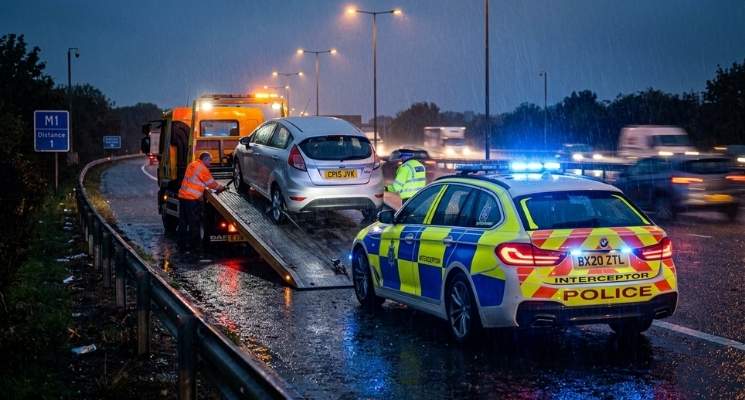
The trend of nearly 160,000 uninsured cars seized on UK roads serves as a stark reminder that the “Wild West” era of driving is over. With the integration of AI-driven surveillance and real-time database sharing, the net is closing. The financial and legal risks far outweigh any temporary saving you might make by skipping a payment. We are moving toward a future where “smart” motorways will automatically issue fines the moment an uninsured vehicle passes a sensor.
If you are struggling with premiums, don’t just stop paying. Look into telematics (black box) insurance, increase your voluntary excess, or switch to a lower insurance group vehicle. There are always legal ways to reduce costs. Being part of the “uninsured” statistic isn’t just a legal headache; it’s a life-altering mistake that can lead to a driving ban, a criminal record, and the loss of your mobility.
Are you sure your car is currently showing as insured on the national database? Don’t take your insurer’s word for it. Head over to the official askMID.com website right now and enter your registration number. It’s free, it’s fast, and it’s the only way to sleep soundly knowing your car won’t be the next one on the back of a police low-loader. Stay informed, stay covered, and let’s keep the UK roads safer for everyone.
FAQ
Can the police seize my car on private land?
Generally, police powers for uninsured seizure apply to “roads or public places.” However, if they follow you from a public road onto private land, or if the car is being used in a way that endangers the public, legal complexities arise. Always keep your vehicle SORN (Statutory Off Road Notification) if it isn’t insured and is kept on private property.
How long do I have to get my car back from the impound?
You typically have 14 days. If you don’t provide the correct documentation and pay the seizure and storage fees within this window, the police are legally entitled to scrap or sell your vehicle.
Does “Fully Comp” insurance allow me to drive any car?
Not anymore. Many modern policies have removed the “Driving Other Cars” (DOC) extension. You must check your specific Certificate of Motor Insurance. If it isn’t explicitly stated, you are driving uninsured.
Will a seized car affect my ability to get insurance in the future?
Absolutely. A seizure usually comes with an IN10 conviction code. This stays on your license for 4 years and must be disclosed to insurers for 5 years, often resulting in massive premium hikes or being refused cover altogether.
5 Comments on “The UK’s Unseen Highway Crisis | Why Nearly 160,000 Uninsured Cars Seized Matters to You”
Comments are closed.