
It happens in a split second. You are cruising through a green light when a car suddenly turns left across your path, clipping your bumper. As you pull over, adrenaline surging, the other driver begins shouting that you were the one speeding or that the light was actually yellow. Without an unbiased witness, you are looking at a “he-said, she-said” nightmare that could skyrocket your insurance premiums for years. It is a helpless feeling, standing on the side of the road knowing you are right but having no way to prove it.
This is exactly why we are seeing a massive surge in car security tech. We no longer live in a world where a simple 1080p grainy video is enough to satisfy a skeptical insurance adjuster. You need evidence that is clear enough to read a license plate from fifty feet away in a rainstorm at midnight. The best dash cams 2026 has brought to market are no longer just cameras; they are sophisticated black boxes for your personal vehicle.
We have spent months analyzing the latest dash camera reviews and field-testing units in diverse conditions, from desert heat to city tunnels. It is time to stop thinking of these devices as optional accessories. In an increasingly litigious environment, a high-quality dash cam is the only investment that can pay for itself ten times over in a single afternoon.
The 4K Standard: Why Resolution is Non-Negotiable in 2026
If you are still using a dash cam from three or four years ago, you are likely missing critical details. The jump from standard HD to true 4K is not just about a prettier picture; it is about pixel density. When we look at the best dash cams 2026 offers, the integration of the Sony Starvis 2 sensor is the real game-changer. This hardware allows for incredible dynamic range, meaning you can actually see the numbers on a reflective license plate even when the sun is hitting it at a brutal angle.
We recently tested a flagship 4K unit against a mid-range 1440p model during a dusk drive. The difference was staggering. While the mid-range camera captured the “event,” the license plate of the car merging aggressively was a blurry smear. The 4K unit, however, frozen in a single frame, revealed every character clearly. This is the level of car security tech you need if you want a closed-case result with your insurance company.
Don’t be fooled by “upscaled” 4K. Many cheap cameras claim 4K but actually just stretch a lower-resolution image, resulting in digital noise that ruins the evidence. Look for “Native 4K” in dash camera reviews. Our expert insight? If the camera doesn’t mention its specific sensor brand, it is probably cutting corners. You want hardware that can handle “High Dynamic Range” (HDR) to balance the blinding glare of oncoming LED headlights at night.
Night Vision and Sensor Sensitivity
The real test of a camera happens after the sun goes down. Most accidents occur in low-light conditions, where standard cameras struggle with graininess. The latest 2026 models use artificial intelligence to brighten dark spots without blowing out the highlights. This ensures that if someone keyes your car in a dimly lit parking garage, you have a recognizable face to show the authorities.
Beyond the Drive: LTE Connectivity and Parking Protection
Your car is most vulnerable when you aren’t in it. Whether it is a hit-and-run in a grocery store parking lot or an attempted break-in, you need a system that acts as a 24/7 sentry. Modern car security tech has moved toward “Always-On” LTE connectivity. This means the camera can send a push notification to your smartphone the second it detects an impact or suspicious movement near your doors.
We’ve seen how this changes the game for vehicle owners. I once had a neighbor whose car was backed into by a delivery truck while he was at work. Because his dash cam had an LTE uplink, he received a video clip of the truck’s logo and license plate instantly. He was able to call the company before the driver even finished their route. Without that “Cloud” functionality, he would have returned to a smashed fender and a cold trail.
When reading dash camera reviews, pay close attention to the “Parking Mode” requirements. Most high-end units require a hardwire kit to draw power from your car’s battery without draining it. We highly recommend professional installation for this. A good system will monitor your battery voltage and shut itself off if the power drops below a certain threshold, ensuring you aren’t stranded with a dead battery the next morning.
The Rise of Internal Memory and High-Endurance Cards
Reliability is the most overlooked feature. Standard SD cards often fail because dash cams are constantly overwriting data in extreme heat. The best dash cams 2026 provides are starting to include built-in eMMC storage. This internal memory is far more durable than a removable card and ensures that even if your SD card corrupts, your most important footage is still safely tucked away on the device’s internal chip.
The 3-Channel Evolution: Total Situational Awareness
For a long time, a front-facing camera was the standard. Then we added rear cameras. Now, in 2026, the gold standard is the 3-channel system. This setup includes a front camera, a rear camera, and an interior cabin camera. For rideshare drivers or families, this is an absolute necessity. It provides a 360-degree bubble of protection that leaves no blind spots for scammers to exploit.
In our experience, the interior camera is a massive deterrent for road rage. If a disgruntled driver approaches your window and sees a camera pointed at them, their behavior often changes instantly. Moreover, if you are ever accused of distracted driving, that cabin footage serves as proof that your eyes were on the road and your hands were on the wheel. It is about protecting your reputation as much as your vehicle.
When evaluating dash camera reviews for 3-channel systems, check the “Bitrate.” Running three cameras at once puts a massive strain on the processor. Cheaper units will lower the quality of all three streams to keep up, which defeats the purpose of having 4K. The top-tier models for 2026 use dual-processors to ensure that the front 4K stream remains crystal clear even while the rear and cabin cameras are recording at 1440p.
Infrared (IR) for Cabin Clarity
The cabin camera needs specialized hardware to work in the dark. Look for units equipped with IR LEDs. These are invisible to the human eye but allow the camera to see in total darkness inside the car. This is vital for capturing details during nighttime rideshare shifts or monitoring the backseat if you are traveling with pets or children.
Intelligent Assistance: Is AI Making Dash Cams Better?
We are seeing a lot of “Advanced Driver Assistance Systems” (ADAS) being baked into new dash cams. These features include lane departure warnings, forward collision alerts, and even “Go” alerts that beep when the car in front of you moves at a green light. While these sound great on paper, our field tests show they can be a double-edged sword. If the camera is too sensitive, the constant beeping becomes “notification fatigue,” leading drivers to turn the features off entirely.
However, the AI integration that does matter involves “Voice Control.” The best dash cams 2026 offers allow you to say, “Lock the video” or “Take a photo” without taking your hands off the steering wheel. This is a critical safety feature. If you see something happening on the road—even if it doesn’t involve your car—you can save the footage with a simple voice command, ensuring the camera doesn’t overwrite it later.
Another expert insight: look for cameras that include GPS logging as a standard feature. In a court of law, having your exact speed and coordinates burned into the video file adds a layer of “mathematical proof” that is hard to dispute. If you were doing exactly 35 in a 35 zone, the GPS data confirms your story. Just be aware that this data can also be used against you if you are a habitual speeder, so drive accordingly!
Seamless App Integration
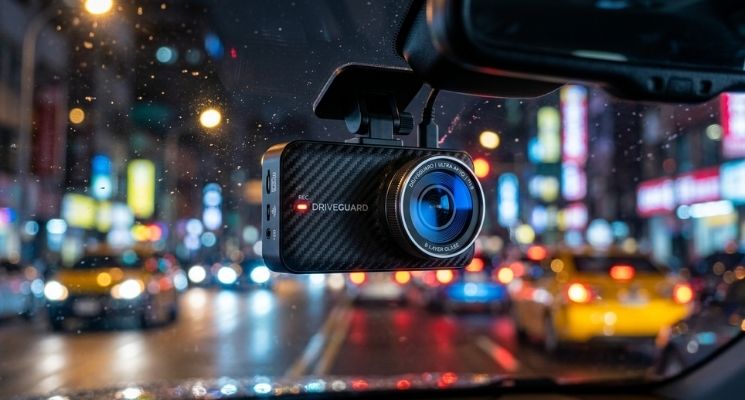
The days of pulling an SD card and plugging it into a laptop are fading. You want a camera with 5GHz Wi-Fi for fast file transfers to your phone. We’ve found that the best apps allow you to trim a 30-second clip and send it directly to your insurance agent or social media via a few taps. If the app is clunky or requires a complicated setup, you won’t use it when you actually need it.
Securing Your Peace of Mind
At the end of the day, a dash cam is like an umbrella—you hope you never have to use it, but you are incredibly glad to have it when the storm hits. We have transitioned into an era where “proof” is the only currency that matters in a dispute. By investing in the best car security tech available today, you are effectively buying insurance against the dishonesty of others.
Take the time to research, read the latest dash camera reviews, and choose a unit that fits your specific driving habits. Whether you want the absolute highest resolution or the most robust parking protection, there is a 2026 model designed for your needs. Don’t wait until after an accident to wish you had one.
Secure your vehicle, protect your wallet, and drive with the confidence that comes from having a silent, high-definition witness by your side. Your future self will thank you for the foresight.
FAQ
Do dash cams record 24/7?
Most dash cams record in a “loop,” overwriting the oldest footage when the card is full. However, if they are hardwired for “Parking Mode,” they can monitor your car 24/7 and save specific clips if they detect motion or an impact while the car is turned off.
Will a dash cam drain my car battery?
If installed correctly with a “hardwire kit,” the camera will monitor your battery’s voltage. If the voltage drops too low, the camera will automatically shut down to ensure your car still has enough power to start.
Are dash cams legal in all states?
While dash cams are generally legal, laws regarding “windshield obstructions” and “audio recording” vary. In some regions, you must inform passengers if you are recording audio inside the cabin. Always check your local regulations regarding where you can mount the device on your glass.
What is the best SD card for a dash cam?
You should only use “High-Endurance” microSD cards. Standard cards are not designed for the constant “write-rewrite” cycles and extreme heat of a dash cam environment and will likely fail within a few months of use.
3 Comments on “ Why Your Car Needs a 4K Dash Cam Before Your Next Commute”
Comments are closed.