
Let’s talk about the elephant in the garage. You finally made the jump to an electric vehicle, and the drive is silent, smooth, and honestly, a bit addictive. But then, late at night, you start scrolling through forums and see the horror stories: people facing $15,000 bills for a total battery replacement after just five years. The “range anxiety” we all talk about isn’t just about reaching the next charger; it’s about the long-term electric car battery lifespan and whether your investment will hold its value. It feels like you’re babysitting a giant, expensive chemistry experiment on wheels.
The good news? Most of those horror stories come from a lack of understanding of how lithium-ion cells actually “breathe.” We have moved past the era of primitive batteries that died if you looked at them wrong. However, an EV battery is not like a gas tank; it is a complex, sensitive organ that reacts to temperature, voltage, and how you treat it on a Tuesday morning. If you treat it like a smartphone—constantly topping it off to 100% and letting it die to 0%—you are effectively suffocating the very thing that powers your freedom.
In this guide, we are going to dive deep into the science of EV battery health. We’ll move past the generic manual advice and look at the real-world habits that separate the 300,000-mile legends from the early degraders. Whether you’re driving a leaf, a high-end Lucid, or the ubiquitous Tesla, these strategies will ensure your EV charging tips are actually working for your wallet. Let’s make sure that battery lasts longer than the car’s upholstery.
The 80/20 Rule: Living in the Stress-Free Zone
If there is one golden rule to internalize, it is that lithium-ion batteries hate extremes. Imagine being forced to eat until you are physically bursting, or being starved until you are faint; that is how your battery feels at 100% or 0% state of charge (SoC). For daily driving, you should aim to keep your battery between 20% and 80%. This “Goldilocks Zone” minimizes the chemical stress on the lithium ions as they move between the anode and the cathode. When the battery is packed to the brim, the high voltage creates internal resistance that leads to heat and degradation.
I’ve seen this play out in real-time with two neighbors who bought the same EV model. One insisted on “topping off” every single night to 100%, just in case they needed to drive 300 miles suddenly (they never did). The other set their charge limit to 80% and only hit 100% before long road trips. After three years, the “topper” had 8% more range degradation than the sensible charger. That is the difference between a car that feels new and one that feels “used” in just a few thousand days. It is about discipline over “just-in-case” anxiety.
Most modern EVs allow you to set a charge limit directly in the app or the infotainment screen. We recommend setting this to 80% for your daily commute and only sliding it to 100% an hour before you head out for a long trip. Leaving a car sitting at 100% in a hot driveway for three days is the fastest way to kill EV battery health. Think of 100% as a temporary state, not a permanent home. Your battery will thank you with a decade of consistent performance.
The Firehose Effect: Why DC Fast Charging is a Double-Edged Sword
We all love the convenience of a 350kW ultra-fast charger. Being able to add 200 miles of range while you grab a coffee feels like magic. But from the perspective of the battery’s chemistry, DC fast charging is like trying to fill a water balloon with a firehose. The sheer amount of energy moving into the cells generates massive amounts of heat. While your car’s thermal management system works overtime to pump coolant through the pack, some of that heat inevitably causes “plating”—tiny metallic deposits that eventually reduce the capacity of the battery.
Does this mean you should never fast charge? Absolutely not. EVs are meant to be driven and enjoyed on road trips. However, the electric car battery lifespan is significantly better protected if you rely on Level 2 (AC) charging at home for 90% of your needs. Level 2 charging is a gentle “sip” rather than a violent “gulp.” It allows the ions to settle into the lattice structure of the battery much more smoothly. We’ve noticed that cars primarily charged at home show significantly flatter degradation curves over a five-year period.
If you must use a fast charger, try to avoid doing it when the battery is already hot from a long high-speed run, or when it is extremely cold. If your car has a “pre-conditioning” feature, use it. This prepares the battery to accept the high-current charge more efficiently, reducing internal friction. A little bit of planning goes a long way. Use the fast chargers for the highway, but let your home outlet be the primary “food source” for your vehicle.
Thermal Management: Why Your Garage Temperature Matters
Heat is the silent killer of all electronics, and EV batteries are no exception. A battery’s “happy place” is actually quite similar to yours—somewhere between 60°F and 80°F. When a battery gets too hot, the chemical reactions inside accelerate uncontrollably, leading to a breakdown of the electrolyte. This is why cars with active liquid cooling (like most modern EVs) have such a huge advantage over older cars with passive air cooling. They can “sweat” to keep the battery safe, but that cooling system still requires energy and has its limits.
In the height of summer, if you have the option to park in the shade or a covered garage, take it. Leaving your car baked in 100-degree sun while sitting at a high state of charge is a recipe for accelerated degradation. Conversely, extreme cold doesn’t “kill” the battery permanently, but it makes it much less efficient. The ions move like molasses in the cold, which is why your range drops in the winter. If your car is plugged in during a cold snap, it can use “shore power” from your house to keep the battery warm, rather than depleting its own energy.
Expert insight: If you’re a high-performance driver, remember that aggressive “jackrabbit” starts and heavy regenerative braking also generate internal heat. If you’ve been driving like a racer on a hot day, give the car a few minutes to circulate its coolant before you plug it into a charger. It’s like a cool-down lap for your battery. Protecting EV battery health is often just about being mindful of the environment you are forcing the car to operate in. Small environmental changes add up to thousands of dollars in retained value.
Long-Term Storage: The “Vacation” Strategy
What happens if you need to leave your car at the airport for a month, or in your garage while you go on a long cruise? This is where many owners make a critical mistake. They either leave it at 100% because they want it ready when they get back, or they leave it near 0% and hope it doesn’t “leak.” Both are dangerous. A battery left at 0% can experience “deep discharge,” where the voltage drops so low that the battery’s management system (BMS) can no longer wake it up. This can “brick” the entire pack, turning your car into a very expensive paperweight.
The ideal storage percentage is roughly 50%. This is the most chemically stable state for a lithium-ion battery. It’s not under pressure from high voltage, and it’s far enough away from the “dead zone” to account for natural phantom drain (the energy used by the car’s computer and security systems while parked). If you’re going away for more than a week, set your charge limit to 50% and leave it plugged in if possible. The car will draw tiny amounts of power from the wall to maintain itself rather than cycling the battery.
If you can’t leave it plugged in, make sure it’s at 50-60% when you park it and turn off any “always-on” features like Sentry Mode or cabin overheat protection if the environment allows. We’ve seen cars left for three months at 50% lose only 2-3% of their charge. It’s a remarkably resilient system when you don’t force it to sit at the edges of its capacity. Proper storage is the ultimate “pro tip” for maintaining a healthy electric car battery lifespan.
Is Your Battery Degrading? How to Tell
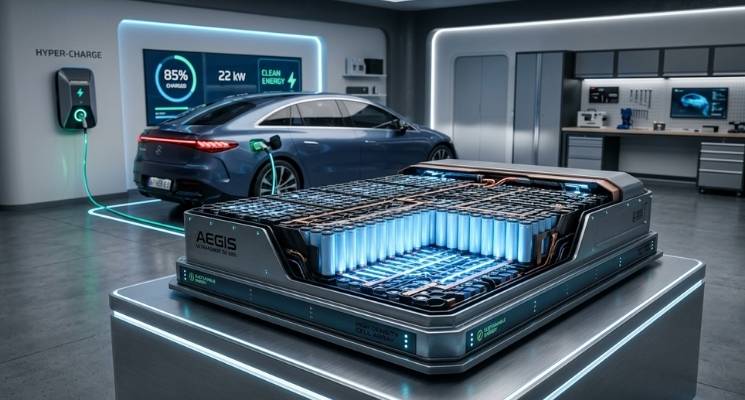
At the end of the day, some degradation is inevitable. It is a chemical reality. Most manufacturers guarantee that the battery will retain 70-80% of its capacity for 8 years or 100,000 miles. But you shouldn’t wait for a warning light to check in on your car’s health. Using third-party tools like Recurrent or phone apps that connect to your car’s OBD-II port can give you a “State of Health” (SoH) reading. This tells you exactly how much of the original capacity is still available.
Don’t panic if you see a 3% drop in the first year. Most batteries experience an initial “settling” period before the degradation curve flattens out. The key is to look for sudden drops, which could indicate a failing cell or a software glitch. By following the EV charging tips we’ve discussed, you are ensuring that your curve stays as flat as possible for as long as possible. You are essentially extending the “youth” of your vehicle.
Owning an EV requires a slightly different mindset than a gas car, but once these habits become second nature, they aren’t a chore. You are simply taking care of the heart of your machine. A well-maintained battery doesn’t just give you more range; it gives you a higher resale value and the peace of mind that your car will be ready for the road for years to come.
What’s your charging routine? Do you stick to the 80% rule, or are you a “100% every night” kind of driver? Let us know your experiences with range and battery health in the comments below! If you found this helpful, share it with a new EV owner who might be feeling that first wave of range anxiety.
FAQ
Does frequent fast charging void my warranty?
No, it won’t void your warranty, but some manufacturers (like Tesla or Hyundai) may throttle your charging speeds if the computer detects an excessive amount of DC fast charging to protect the battery from further heat damage.
Should I always wait for my battery to get to 10% before charging?
No. Unlike old nickel-cadmium batteries, lithium-ion batteries do not have a “memory effect.” Short, frequent charges (e.g., from 40% to 70%) are actually better for the battery than deep cycles from 10% to 90%.
Does “Cabin Overheat Protection” drain the battery significantly?
It can. In high heat, this feature can use 2-3% of your battery per day. If you are parked in a safe, shaded spot, you might consider turning it off to save energy, but it is excellent for preserving the car’s interior materials.
Can I replace just one dead cell in an EV battery?
Technically yes, but practically no for most consumers. Most EV batteries are sealed units. While some specialized shops can swap modules, most dealerships will only offer a full pack replacement for safety and warranty reasons.



One Comment on “Your EV Battery is a Living Thing | How to Keep It from Dying Early”
Comments are closed.